
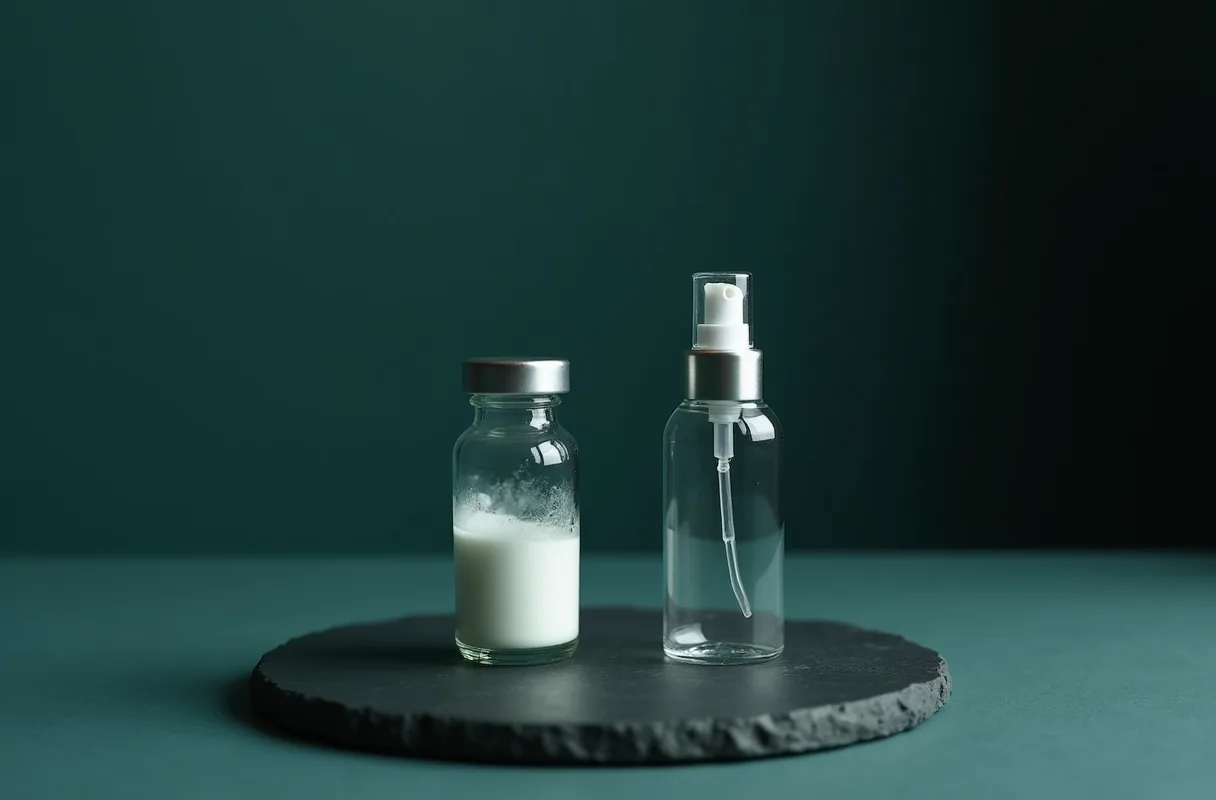
Pinealon is listed at 20 mg for $81.20 and 10 mg for $112.00. Read those two lines again: the smaller vial costs more than the larger one, in absolute terms, not merely per milligram.
This covers that ladder and what to do about it, what the compound is as a chemical object, how the spray format compares, and how to read the evidence base. Everything about biological activity is reported from published work and named by model. The material is supplied for laboratory research only.
| Compound | Vial strengths | Molecular weight | Amino acids |
|---|---|---|---|
| Pinealon | 10 mg, 20 mg | 418.41 g/mol | 3 |
| Pinealon Liquid Spray | 10 mg · 10 mL | 418.41 g/mol | 3 |
From the Restate Health catalog records. Lot-specific values are on each certificate of analysis.
The ladder, first
| Strength | Price | Per milligram |
|---|---|---|
| 10 mg | $112.00 | $11.20 |
| 20 mg | $81.20 | $4.06 |
Pinealon catalogue strengths
The 20 mg vial is cheaper in total and holds twice as much, so it is better value on both axes at once — $4.06 per milligram against $11.20, a factor of 2.76. There is no reading on which the 10 mg vial is the better purchase unless a specific requirement forbids holding the larger quantity.
This is an unusually clear example of the general point in price per milligram: a strength ladder is not guaranteed to run in the direction intuition expects, and checking the step above and below a listing takes a minute. Most inversions are subtle; this one is not, and a buyer selecting the smaller vial out of habit pays more for less.
The one legitimate reason to prefer the smaller vial is consumption rate. If the 20 mg will not be used inside its re-test window, the effective cost per milligram of material actually used may favour the smaller one — the arithmetic in retest dates and expiry dates governs. Run that calculation rather than assuming either way.
A very short peptide
Pinealon belongs to the group of short synthetic peptides usually catalogued as bioregulators, a class associated with Russian research from the late twentieth century onwards. The defining feature of the class is length: these are sequences of three or four residues, which makes them among the simplest peptides in any catalogue to synthesise.
That brevity has two implications. Synthesis is straightforward and inexpensive, so the price reflects market and scale rather than chemical difficulty. And analysis is correspondingly simple — a short sequence has few possible deletion products, and chromatographic separation from them is generally uncomplicated.
It also means identity confirmation is cheap and there is no excuse for its absence. For a tripeptide or tetrapeptide, mass spectrometry plus a stated chromatographic method establishes identity comfortably. Bioregulator peptides explained covers the class and its contested evidence base, and buying bioregulators covers the range as a purchasing group.
Reading the evidence base
The bioregulator literature is unusual among catalogue compounds in that much of it originates from a single research tradition, a substantial portion is published in Russian-language journals, and independent replication outside that tradition is limited.
That is a statement about the state of the evidence, not a claim that the work is wrong. For a buyer it means two things. Claims found on vendor pages are frequently several steps removed from what the primary work reports, so they are worth tracing rather than accepting. And the compound should be approached as a research material in a field where the questions are open, which is exactly what a research-use designation implies.
Research use only: what the designation means covers the obligations that come with it.
The spray format
Pinealon Liquid Spray is listed at 10 mg in 10 mL for $74.97, which makes the comparison with the vials straightforward in one respect and complicated in another.
Straightforward: it contains 10 mg, the same as the smaller vial, at $74.97 against $112.00 — so against the 10 mg vial the spray is cheaper. Complicated: against the 20 mg vial at $81.20 it is about 1.8 times the price per milligram — $7.50 against $4.06 — and it is a solution rather than a dry solid.
The dry vial is the more durable and more flexible purchase. Lyophilised material is substantially more stable than material in solution, its stability clock does not start until reconstitution, and the buyer chooses the concentration. Peptide shelf life: lyophilised versus in solution covers the difference, and nasal sprays and liquid formats covers what the prepared format buys.
For a prepared liquid, ask for the manufacture date rather than only the re-test date, and for a content uniformity statement across the fill.
What the two formats cost over a year
Comparing a vial against a spray on sticker price understates the difference, because the two are consumed differently.
The 20 mg vial at $81.20 holds twice the material of the spray at $74.97 and is dry, so it keeps until reconstituted. The spray is already in solution and its clock is running whether it is used or not. For steady consumption the vial wins on both material and shelf life; for occasional use the gap widens, because the spray's unused remainder expires while the vial's does not.
The case for the spray is preparation. It removes reconstitution, measurement and the diluent decision, and for a setting without the means to do those properly that convenience is the product. Bacteriostatic water and reconstitution solution covers what preparing a vial actually involves.
Why a short sequence still needs a full certificate
There is a temptation to accept thinner documentation for a simple molecule on the grounds that less can go wrong. The reasoning is backwards.
A short sequence is cheap to make and cheap to test, so complete documentation costs the supplier very little. Its absence therefore says more here than it would for a difficult compound where testing is genuinely expensive. A tripeptide with no identity method on its certificate is not a supplier economising on a hard problem; it is a supplier not doing an easy one.
The second reason is that short peptides are the easiest to substitute. Sequences within a family differ by one or two residues, cost similar amounts to produce, and look identical as white powder. Identity confirmation is the only thing standing between a catalogue name and the contents of the vial, and for this class it is inexpensive enough that there is no argument for omitting it.
Buying across the bioregulator range
Pinealon is one of seven bioregulator listings, and anyone buying it is likely to be looking at the others. Two habits make that easier.
Check every ladder in the group rather than assuming the Pinealon inversion is unique. Several of the listings carry two strengths, and the arithmetic takes a minute each; Epithalon, for instance, is listed at 10 mg and 50 mg, and the per-milligram figures are worth comparing before defaulting to either.
And buy the class on documentation rather than on price, because the prices across the group are close enough that documentation is the real differentiator. Buying bioregulators covers the range together, and Epithalon strengths, sequence and certificates covers the most commonly bought member in detail.
What to check before ordering
The sequence, written out, with any terminal modifications. Purity by a named chromatographic method with stated conditions — HPLC purity explained covers what the figure measures. Identity by mass spectrometry, which for a sequence this short is inexpensive and should be present. Net peptide content, so the price can be compared at all. And the salt form.
Reading a certificate of analysis line by line covers the full document, and comparing two certificates side by side covers what to do when two suppliers report different things.
Handling
Cold, dry and dark for the sealed vial; follow the stated conditions for the spray, and be careful of the lower bound on a liquid, since freezing an aqueous product is a different kind of event from warming it. Storage temperatures: what the specification means covers the ranges.
Short peptides are relatively forgiving but not exempt. Aliquot after reconstitution rather than cycling a single container — freeze-thaw cycles and aliquoting covers the practice, and it applies regardless of how simple the sequence is.